Staying safe at Reynisfjara black sand beach
Reynisfjara is the black sand beach near Vík where most South Coast day tours stop, usually for about 30 minutes. It is also the riskiest stop on the route, because some waves run far higher up the sand than the rest. A few habits keep the visit safe.
Why this beach is different
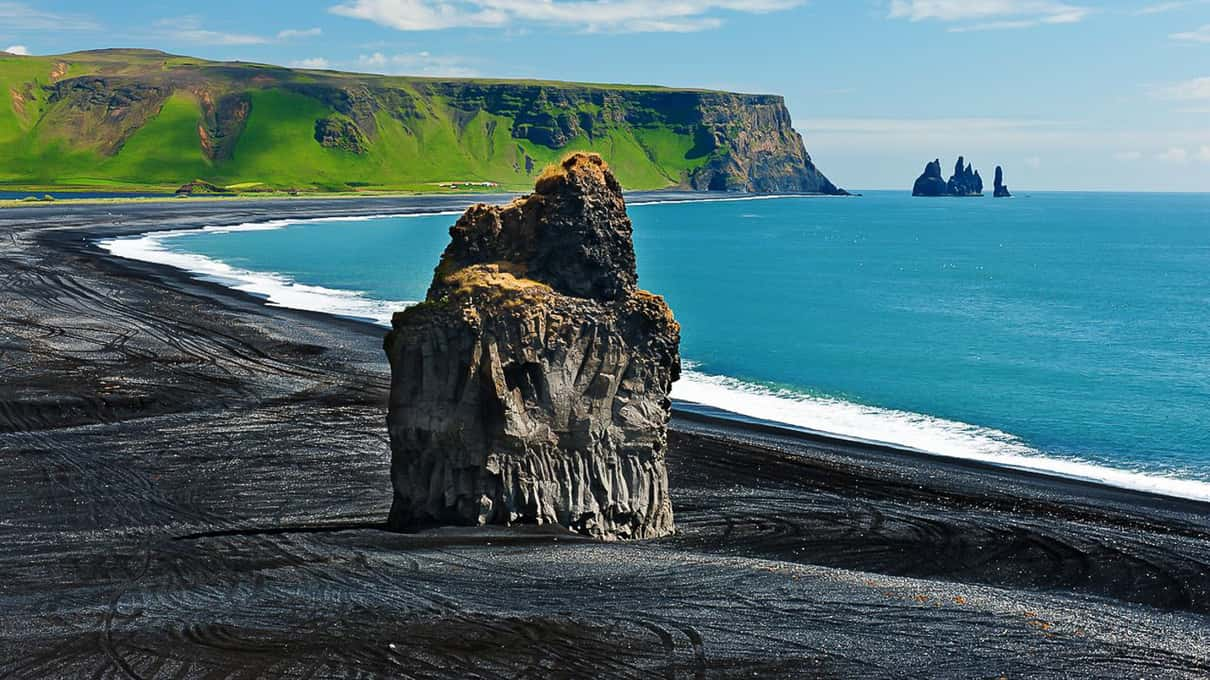
Reynisfjara faces the open North Atlantic with nothing offshore to slow the swell. The beach slopes steeply into the sea, so waves arrive with force and can rush far up the sand, well past the line where earlier waves stopped.
A calm-looking sea is no guarantee. Large waves tend to come in sets with quieter spells between them, and those quiet minutes are what lure visitors closer to the water.
These are the sneaker waves the signs at the path warn about. A visitor caught by one can be knocked over and dragged back with the outflow, into cold water with a strong current.
The beach is part of most south coast tours from Reykjavik, and the view earns its place on the route. Treat the waterline the way you would treat a busy road, and the half hour on the sand stays a highlight.
Stay well back from the water
The simplest rule is distance. Stand far up the beach, well above the wet sand, and keep watching the sea rather than the phone in your hand.
Never turn your back to the waves, even for a photo with the sea stacks behind you. A wave that arrives while you face the camera leaves you no time to move.
Darker, wet sand shows where recent waves reached, but a large one can go further. If you see the sea racing up toward you, head inland at once instead of trying to outrun it along the beach.
Keep bags and tripods up the beach with you as well. Going back for something the water has reached is how a small scare turns into a dangerous one.
The warning signs and lights
At the path down to the beach, signs explain the danger and a warning-light system shows the current risk. Follow the signs and warning lights, and if part of the beach is closed, stay out of it.
Listen if your guide adds a warning before the stop, and read the signs yourself too. Conditions can change within the half hour, and the lights speak to every visitor, not only your group.
A tour bus delivers a crowd all at once, and that crowd tends to drift toward the water for the same photo. Stand with the people farthest back, not with the ones testing the waves.
Basalt columns, the cave and the sea stacks
The basalt columns at the foot of the cliff are where most photos are taken. They rise in neat hexagonal steps beside a shallow cave, and both sit close to where waves can reach on a rough day.
Climb the columns only as high as you can step down from safely, and watch the sea while you do. Keep out of the cave when water washes near its mouth, since the only way out is the way in.
Offshore stand the Reynisdrangar sea stacks, best seen from well up the beach. A step back gives a better frame than a step toward the water, and a zoom does the rest.
The beach stop in a smaller group
Your Day Tours runs the classic loop in a Mercedes minibus over 10 hours, with Reynisfjara, Seljalandsfoss, Skógafoss and Sólheimajökull. Pickup is from authorized downtown points only.
Children on the black sand
Hold children by the hand on the beach rather than watching them from a few steps away. Water that only reaches an adult's knees can knock a small child off their feet.
BusTravel Iceland does not take children under 2, and we saw no higher age limit on the minibus or Gray Line listings. Toddlers do reach this beach, so plan the stop around them.
Carry small children when the waves are high, and agree before you get off the bus that nobody goes near the waterline. A rule set on the bus is easier to keep than one argued on the sand.
Our packing list for the day covers boots with grip, which help on the loose sand. If someone in your party is unsteady on their feet, the upper beach near the path is a fine place to wait.
How long tours stay, and who calls time
On BusTravel Iceland's day at ~$133 and Gray Line's classic at ~$123, the listings give 30 minutes at Reynisfjara. The guide sets the time on the beach, so plan your photos inside it rather than rushing near the water at the end.
Your Day Tours at ~$152 and the glacier hike day at ~$194 include the beach as well. Our guide to the stops in order shows where it falls in each day, and the small-group or big-bus comparison explains how a minibus changes the stop.
The same habits apply at Diamond Beach on the Jökulsárlón day, where waves wash over chunks of ice on the sand. If you are still choosing, start with the south coast tour we pick first.
When the weather turns
Storms raise the risk at Reynisfjara far more than at the waterfalls. In rough seas the guide may shorten the beach stop or keep the group near the path, and that call is for your safety.
Never go into the water to paddle or swim, whatever the season. The sea here is cold all year, and the current can carry a swimmer away from the beach quickly.
Winter often brings bigger swells and shorter light, as our guide to the best time to go explains. For every option side by side, browse the guided tours of Iceland's south coast we cover.